
Tethered UAV
Long-endurance tethered UAV platforms designed for security monitoring, emergency response, communication support, and industrial aerial operations, with stable power supply, flexible payload options, and dependable field performance.
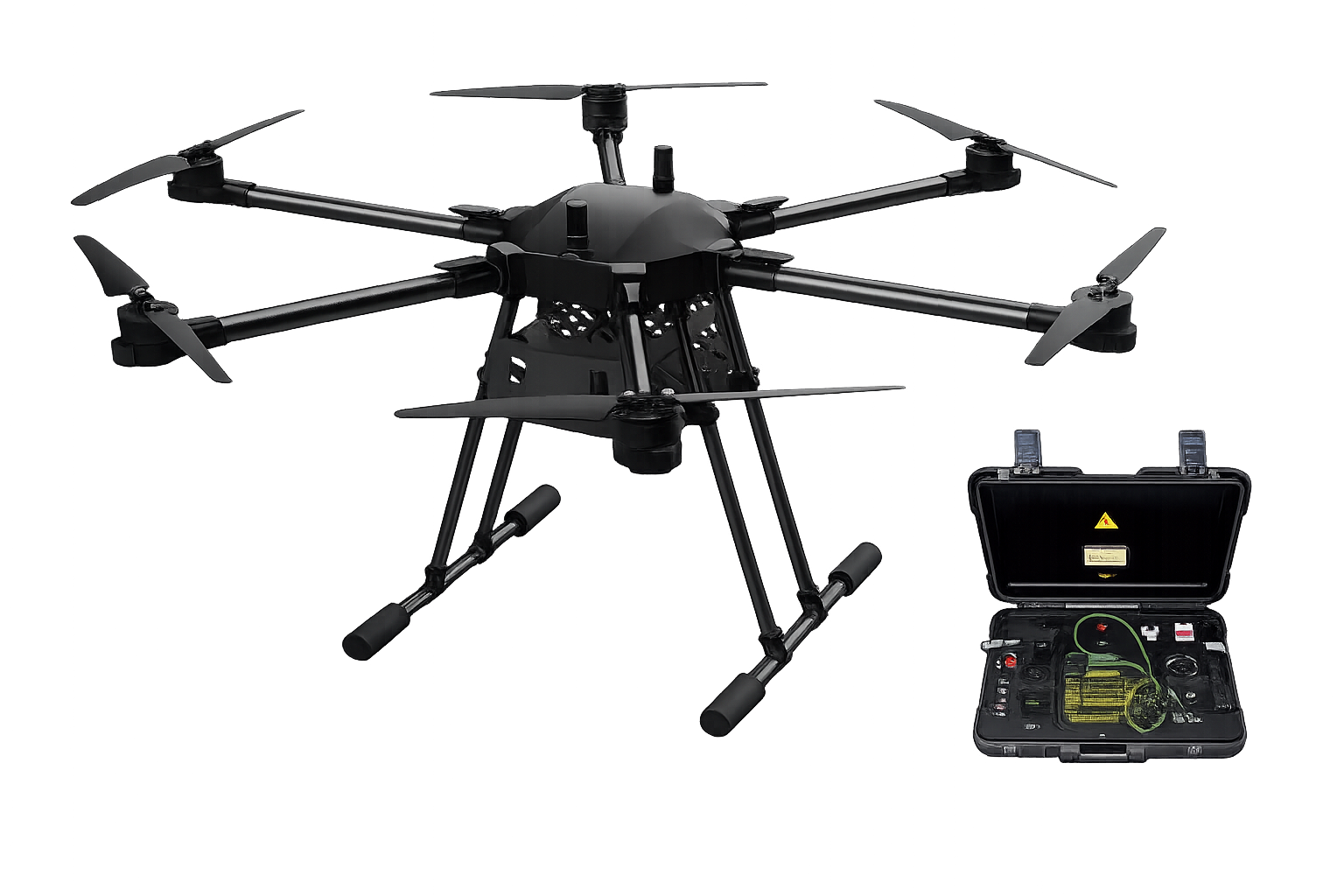
Tethered UAV vs Normal Battery Drone
A tethered UAV is designed for missions that require continuous aerial presence, stable power support, and long-duration hovering over a fixed operating area. Unlike a normal battery-powered drone, a tethered UAV receives power through a tethered cable connected to a ground power system, helping it operate for much longer periods without frequent battery changes.
A normal battery drone is more suitable for free-flight missions, route inspection, mapping, patrol, and tasks that require movement over a wider area. However, its flight time is limited by onboard battery capacity, payload weight, and weather conditions.
For fixed-position missions such as security monitoring, emergency response, communication relay, temporary lighting, and industrial site supervision, a tethered UAV is usually the better choice because it provides longer endurance, stable hovering, and continuous mission support.
-
Provide continuous aerial observation for events, critical infrastructure, and temporary security operations.
-
Support rescue coordination, command visibility, and aerial awareness during urgent missions.
-
Carry communication relay equipment for temporary signal extension in the field.
-
Assist with inspection, supervision, lighting, and other specialized long-endurance aerial tasks.
Applications
The tethered UAV platform is developed for missions that require continuous aerial presence, stable power support, and dependable operation in complex field conditions. It is suitable for security monitoring, emergency response, communication relay, temporary lighting support, industrial site supervision, and other long-duration aerial tasks where conventional battery-powered UAVs face endurance limits.
Why Choose This Tethered UAV Platform
Built for Long-Endurance Operations
Designed for continuous aerial presence with stable tethered power support for extended missions.Flexible Payload Capacity
Available across payload classes from 2 kg to 70 kg for surveillance, communication, lighting, and customized applications.Stable Flight Performance
High-strength carbon fiber and aviation-grade aluminum structure helps maintain reliable performance in demanding outdoor conditions.
Accurate Positioning and Control
Supports RTK and multi-constellation navigation including GPS, BeiDou, Galileo, and GLONASS.Field-Friendly Deployment
Selected models feature foldable structures for easier transport, storage, and faster setup.Safety for Continuous Missions
Protection functions include tether interruption response, low-battery landing logic, and backup power switching.
| Product | Axis Configuration | Propeller | Motor-to-Motor Distance / Wheelbase | Weight / Empty Weight | Standard Payload | Max Flight Altitude | Expanded Size | Folded Size | Max Flight Altitude / Tethered Height | Limited Ascent/Descent Speed | Backup Landing Battery |
|---|---|---|---|---|---|---|---|---|---|---|---|
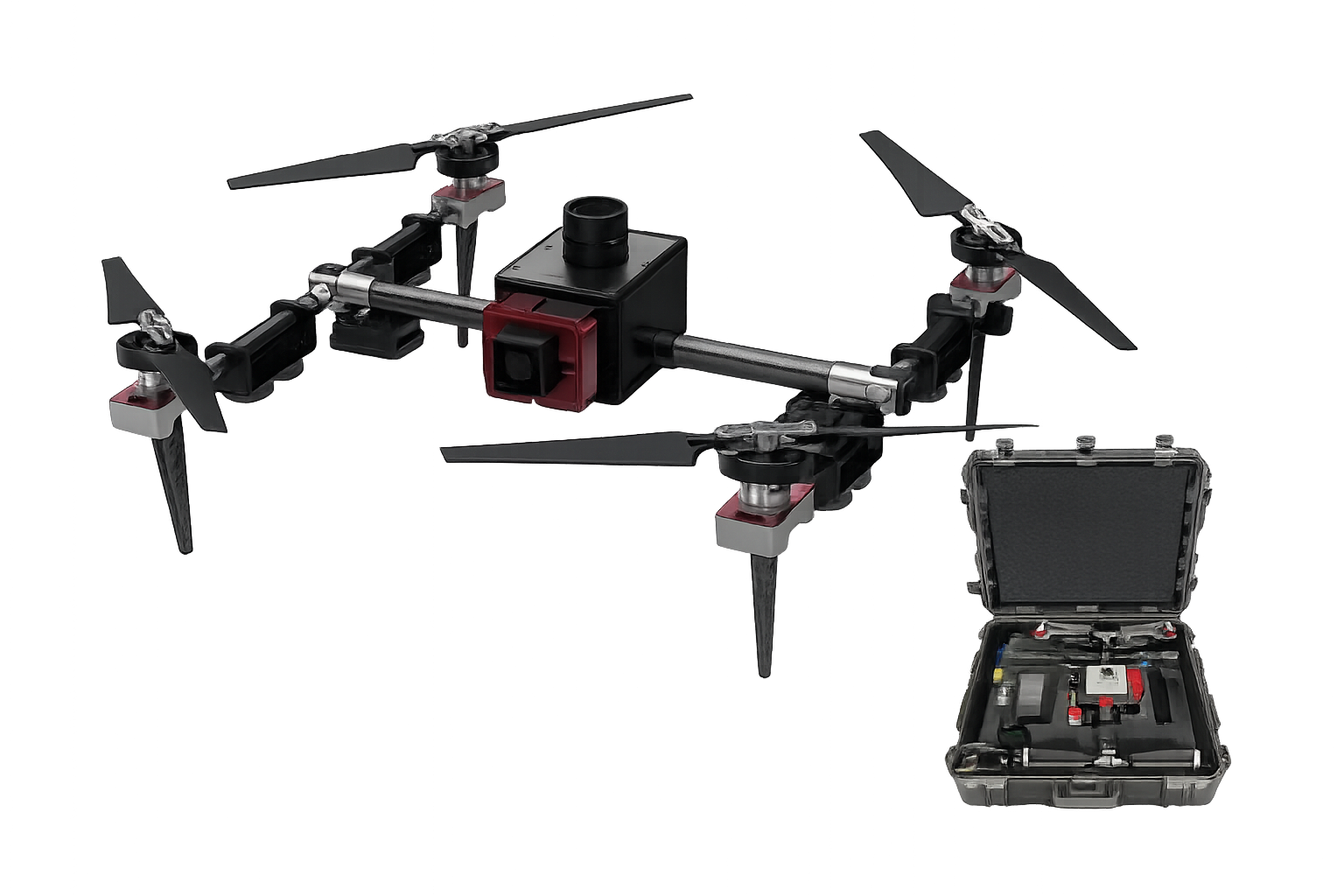
KG-2
|
4-axis | — | 650 mm | Approx. 3.2 kg | — | ≥4500 m | — | — | — | 1 m/s | 6S 2200mAh (supports approx. 5 min emergency landing flight) |
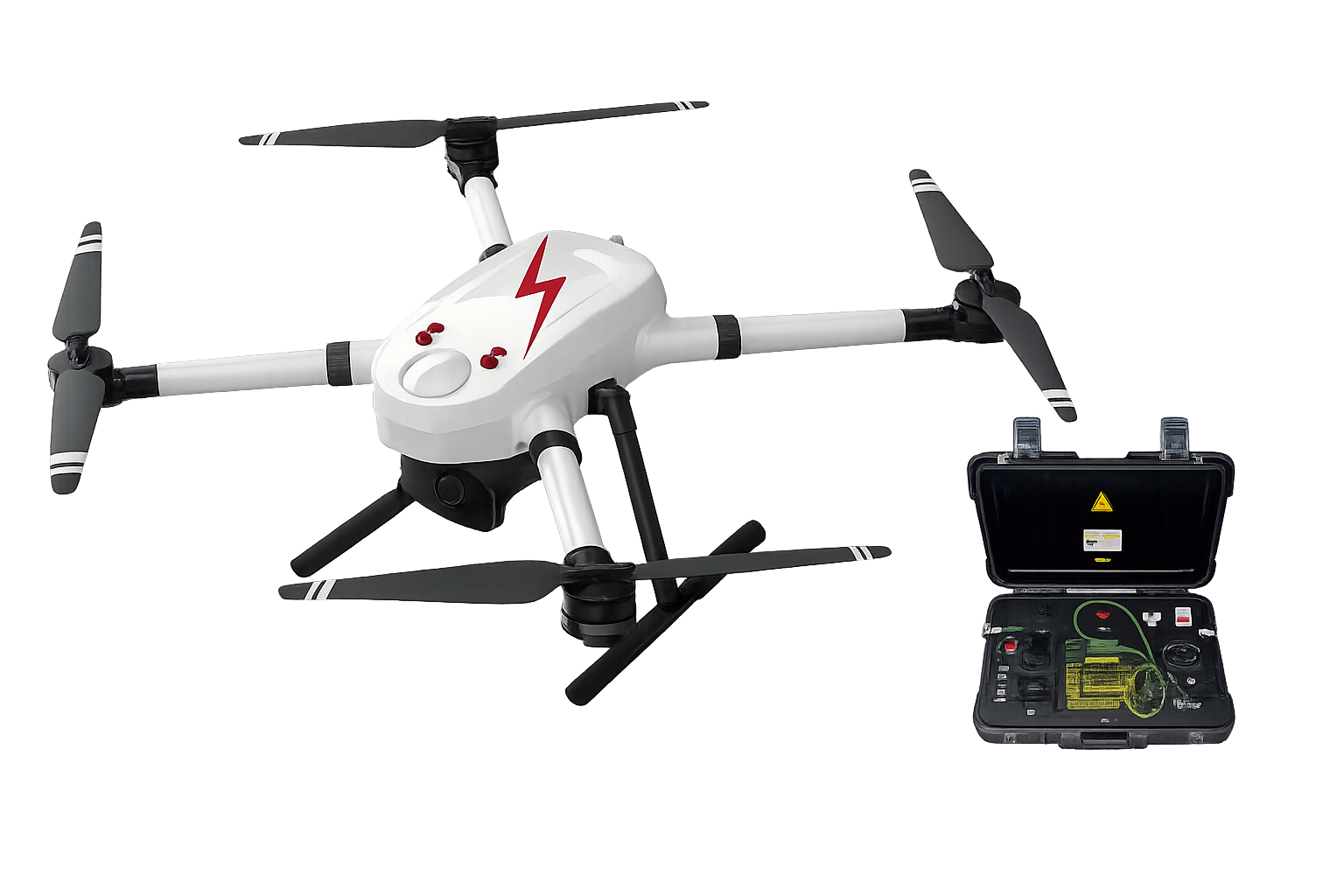
KG-2
|
4-axis, 4-prop | 24-inch folding propeller | 950 mm | 4.5 kg | 5 kg | 5000 m | 1100 × 804 × 470 mm | 480 × 390 × 470 mm | — | — | — |
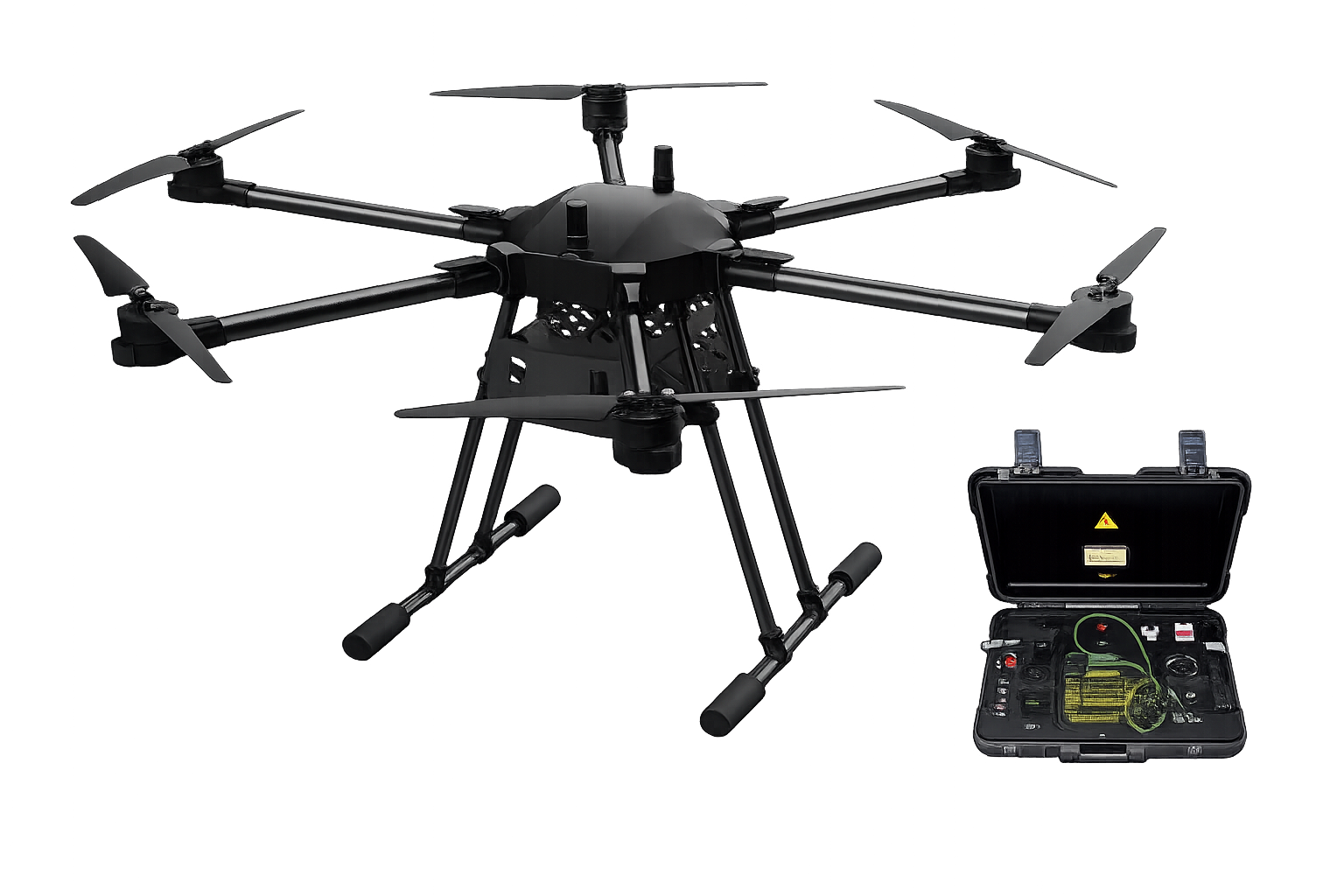
KG-10
|
6-axis, 6-prop | 24-inch folding propeller | 1300 mm | — | 10 kg | — | 1200 × 1200 × 670 mm | 600 × 500 × 670 mm | 100 m tethered hovering height (customizable) | — | — |
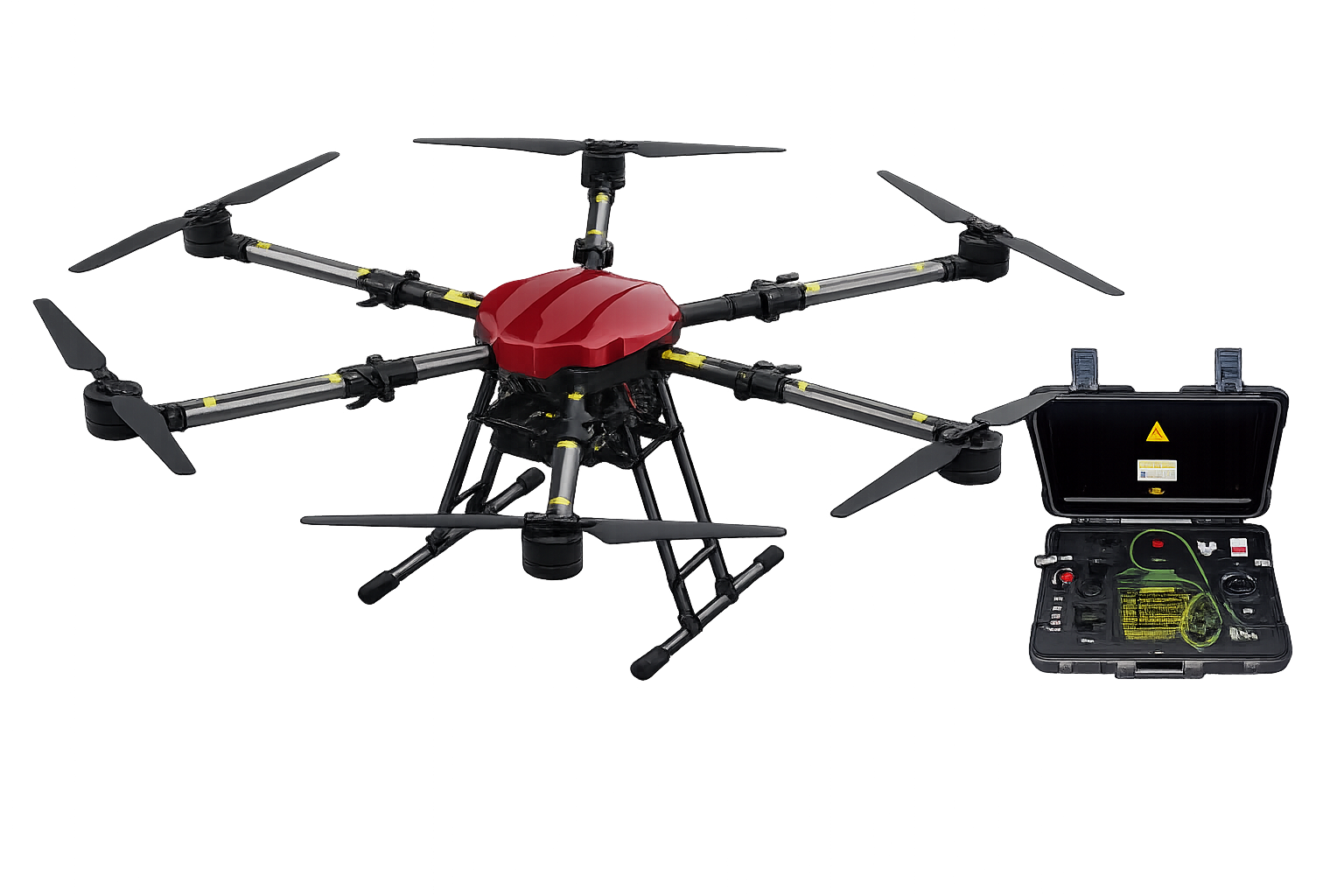
KG-20
|
6-axis, 6-prop | 34-inch folding propeller | 1800 mm | — | 20 kg | — | 1940 × 1700 × 750 mm | 1160 × 1080 × 750 mm | 300 m tethered hovering height (customizable) | — | — |
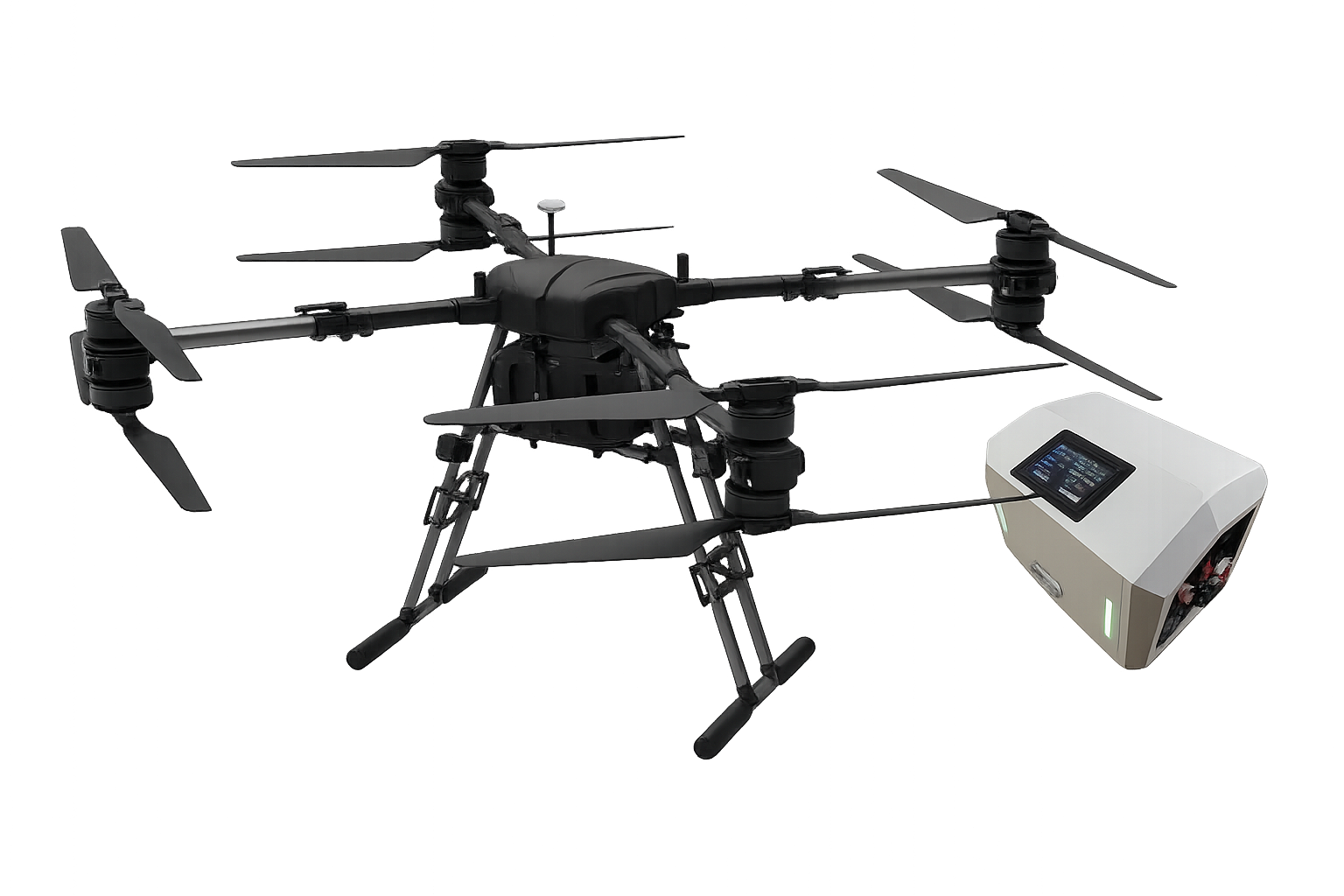
KG-70
|
4-axis, 8-prop | 49-inch folding propeller | 2110 mm | — | 70 kg | — | 1660 × 1660 × 1100 mm | 1165 × 1165 × 1100 mm | 300 m tethered hovering height (customizable) | — | — |
Additional Notes
Material: This series is built with high-strength structural materials, including carbon fiber and aviation-grade aluminum, to ensure durability and reliable performance in demanding applications.
Endurance: This series can provide endurance of up to 12 hours or more, depending on the specific configuration and application scenario.
Positioning Accuracy: This series supports high-precision positioning solutions, including RTK capability on selected configurations, to meet stable and accurate operational requirements.
Positioning System: This series can support multiple global navigation systems, including GPS, BeiDou, Galileo, and GLONASS.
Wind Resistance: This series can meet Level 7 wind resistance requirements for stable operation in complex outdoor environments.
Power Supply and Backup Battery Explanation
A tethered UAV uses a ground-based power supply system to deliver continuous power to the aircraft through a tethered cable. This allows the UAV to maintain long-duration hovering and stable aerial operation without relying only on onboard battery capacity.
The tethered cable supports long-endurance operation, while the onboard backup landing battery is used as a safety measure. If the tethered power supply is interrupted, the backup battery helps the UAV maintain basic flight control and complete an emergency landing procedure.
For example, the KG-2 configuration listed on the page includes a 6S 2200mAh backup landing battery, supporting approximately 5 minutes of emergency landing flight. The page also states that the series includes safety functions such as tether interruption response, low-battery landing logic, and backup power switching.
Payload Class Selection Guide
The tethered UAV range is available in multiple payload classes to support different long-endurance mission requirements. Lightweight configurations are suitable for compact surveillance and monitoring tasks. Mid-range platforms can support communication, lighting, and inspection equipment. Heavy-duty configurations are better suited for larger payload integration and more demanding industrial or emergency missions.
FAQ
-
A tethered UAV can stay in the air much longer than a normal battery-powered drone because it receives continuous power from a ground power system through a tethered cable. According to the current Huanxin tethered UAV page, this series can provide endurance of up to 12 hours or more, depending on the specific configuration and application scenario.
-
The maximum tethered height depends on the selected UAV model, tethered power system, payload weight, operating environment, and project safety requirements. On the current page, the KG-10 supports 100 m tethered hovering height, while the KG-20 and KG-70 support 300 m tethered hovering height. These tethered height configurations can also be customized for special mission requirements.
-
The payload capacity depends on the selected tethered drone model. The Huanxin tethered UAV series covers payload classes from 2 kg to 70 kg for surveillance, communication, lighting, inspection, and customized industrial applications. The current model table includes KG-2, KG-10, KG-20, and KG-70 configurations, with payload classes including 5 kg, 10 kg, 20 kg, and 70 kg depending on the model.